
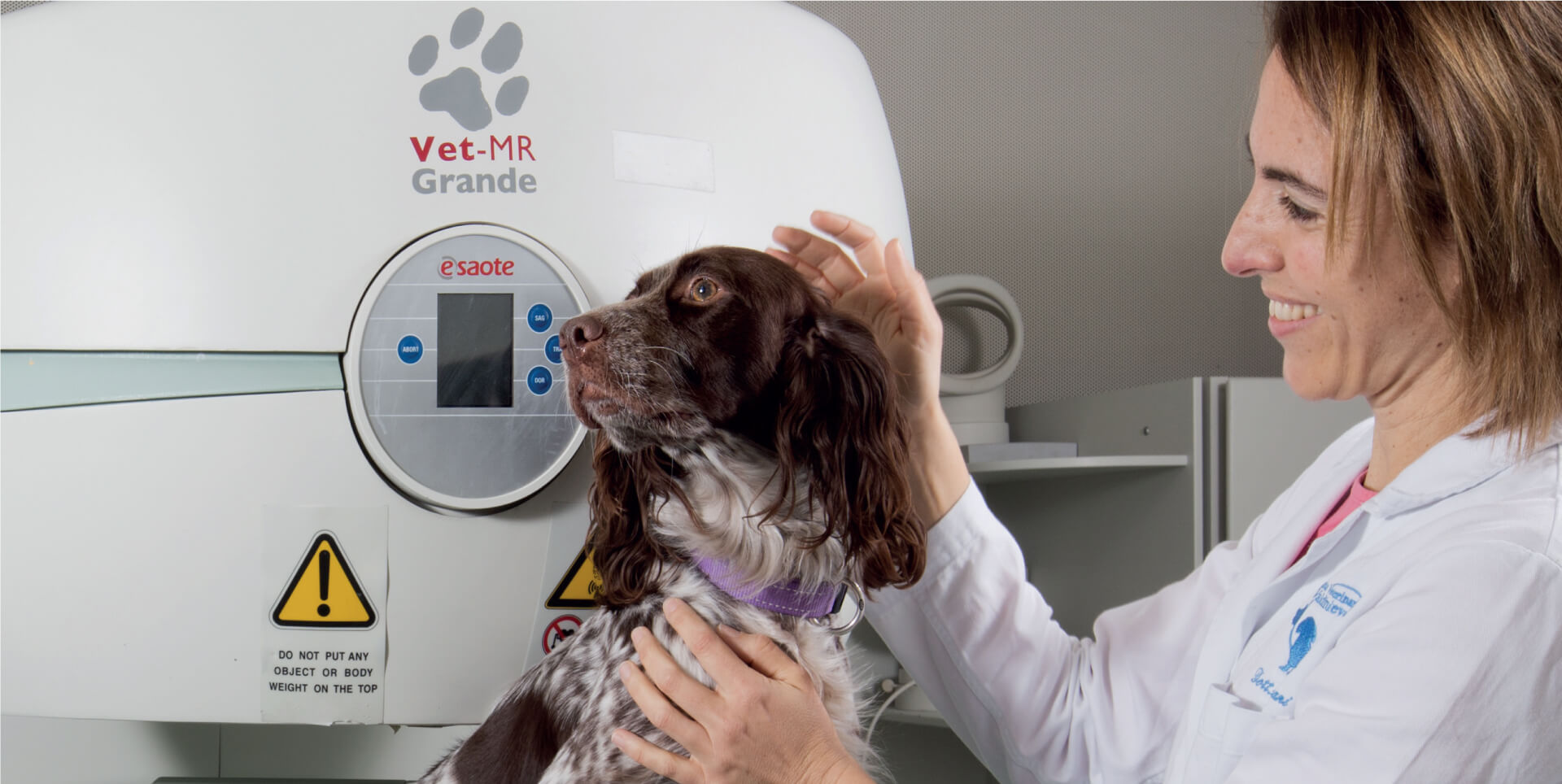
Why practices are bringing MRI in-house
MRI has moved from a rare referral-only service to a core diagnostic tool in veterinary medicine. Neurology, orthopedics, and oncology cases increasingly depend on it, and practices that refer every MRI case elsewhere lose both the case and the continuity of care. For specialty and referral hospitals in particular, an in-house scanner can shorten the path from diagnosis to treatment and strengthen the practice's position as a destination for complex cases.
Adding MRI is also a significant project that touches clinical, operational, and building decisions at once. This guide is written for practice owners and managers who are weighing the move. It walks through the key questions in the order they usually arise, from whether the practice is ready to how to choose the partners who will deliver the suite.
Is your practice ready for MRI?
The first question is clinical rather than technical: is there enough demand, and the expertise to use the scanner well? Practices typically look at how many cases they currently refer out for MRI, whether they have or can attract specialists in neurology, orthopedics, or internal medicine who rely on advanced imaging, and whether nearby clinics would refer cases to them. A scanner delivers value when it is used regularly and its images are interpreted by people who know what to look for.
Operational readiness matters too. Veterinary MRI is performed almost entirely under general anesthesia, so the practice needs reliable anesthesia capability, monitoring, and trained staff to support each scan. Scheduling, image reading — in-house or through a teleradiology service — and the staffing to run the suite should all be part of the plan from the start.
Choosing the right system
The scanner choice shapes almost everything that follows. Veterinary systems span a wide range, from compact low-field scanners designed specifically for animals to high-field superconducting systems used in referral and university hospitals. The trade-offs between them — image quality, scan speed, purchase cost, siting complexity, and running requirements — are covered in detail in our guide to low-field vs. high-field MRI in veterinary practice.
As a rule, the system should match the caseload and the specialists who will use it. A general practice adding imaging for orthopedic and neurologic cases has different needs from a referral center scanning complex oncology cases every day. Involving the clinicians who will read the images in the selection, and confirming the vendor's service and support in your area, helps avoid a mismatch between scanner and practice.
Space, building, and shielding
Once the system is chosen, the next question is where it will go. Every MRI requires an RF shielded room — a Faraday cage that keeps external interference away from the scanner — and the scanner manufacturer specifies the shielding performance the room must achieve. The room also needs space for anesthesia and monitoring equipment, safe access for moving anesthetized animals, and penetrations for gases, power, and data. Our article on MRI shielding for veterinary facilities covers these design considerations in depth.
Many practices install MRI in an existing building rather than building new. In these cases a modular Faraday cage is often the most practical option, because it is prefabricated and assembled inside the available room. Floor loading, ceiling height, and access for delivering the scanner should be checked early, especially for high-field systems that may need magnetic shielding and a quench pipe.
Budget and timeline
The total investment includes the scanner itself, the shielded room, building work, anesthesia and monitoring equipment, and ongoing costs such as service contracts and staffing. On the shielding side, cost depends mainly on field strength, room size, whether magnetic shielding is needed, and the condition of the building — the drivers are explained in how much MRI shielding costs. Getting project-specific quotes based on your chosen scanner is the only reliable way to build the budget.
Timing should be planned around the scanner delivery date. Design, component lead times, on-site installation, and shielding testing all have to be completed before the scanner can be installed and commissioned. Our guide to the MRI shielding installation timeline breaks down each phase so you can set a realistic go-live date and avoid paying for a scanner that is waiting for its room.
Choosing the right partners
Adding MRI involves several partners: the scanner vendor, the shielding contractor, the architect or builder, and often a teleradiology provider. The most important step is to bring them together early, so the scanner, the room, and the building are planned as one project rather than three separate ones. The shielding contractor in particular should be involved before the room is designed, not after.
When selecting a shielding partner, look for experience with veterinary installations, a guaranteed and independently tested result, and support through the life of the enclosure — the factors covered in how to choose an MRI shielding contractor. With the right partners and a clear plan, adding MRI can become a lasting asset that keeps complex cases in your practice and strengthens its reputation for advanced care.
Frequently Asked Questions
How do I know if my veterinary practice is ready for MRI?
Look at how many cases you currently refer out for MRI, whether you have or can attract specialists in neurology, orthopedics, or internal medicine, and whether nearby clinics would refer to you. You also need reliable anesthesia capability and trained staff, since veterinary MRI is performed almost entirely under general anesthesia.
Can MRI be installed in an existing veterinary building?
Yes, and many practices do so. A modular Faraday cage is often the most practical option because it is prefabricated and assembled inside the available room. Floor loading, ceiling height, and delivery access should be checked early, especially for high-field systems that may need magnetic shielding and a quench pipe.
When should the shielding contractor be involved?
As early as possible — ideally as soon as the scanner is selected and before the room is designed. Early involvement lets the contractor advise on room size, structure, penetrations for anesthesia and monitoring, and the construction method, and helps align the shielding schedule with the scanner delivery date.