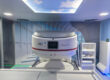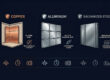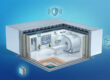
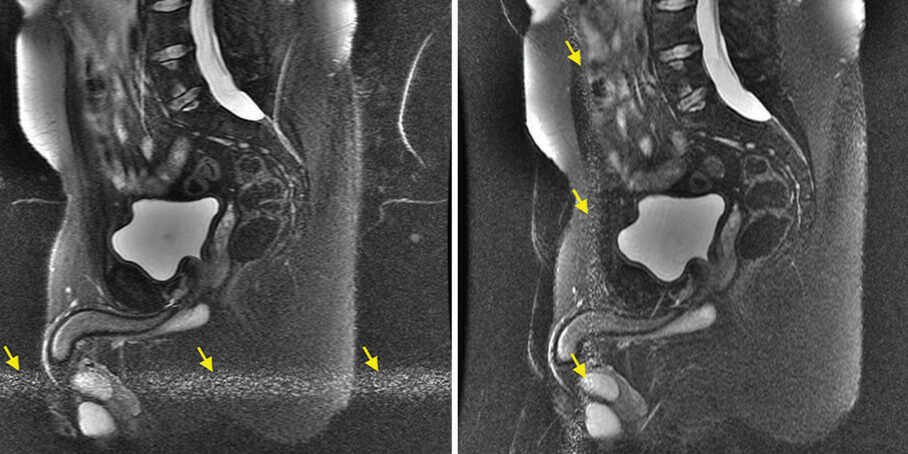
The primary function of an MRI shield is to create an electromagnetically “quiet” zone. In the world of high-field imaging, even the smallest breach in the Faraday cage can lead to RF leakage, a phenomenon where external electromagnetic noise infiltrates the scan room. This interference doesn’t just lower image quality; it can render a diagnostic study useless by introducing artifacts that mimic or obscure pathology.
The physics of RF leakage
RF leakage occurs when the continuity of the conductive envelope is compromised. In a high-performance MRI suite, achieving consistent MRI shielding performance standards requires attenuating external signals by at least 100 dB across a specific frequency range. A breach as small as a loose bolt on a door frame or a microscopic gap in a solder seam can act as a “slot antenna,” allowing ambient noise from FM radio or cellular networks to enter the scan room and degrade the Signal-to-Noise Ratio (SNR).
Critical points of vulnerability
Identifying leakage requires a focus on the penetrations of the shield. A solid wall rarely fails; interference almost always enters through transition points:
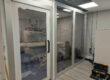
* RF Doors: As the only moving part of the shield, doors are the most common source of leakage. Over time, the conductive gaskets can become damaged or dirty, breaking the electrical seal.
* Observation Windows: The specialized mesh integrated into the glass must be perfectly bonded to the wall shielding. Any oxidation at the contact points can lead to localized leakage.
* Penetration Panels: Every cable entering the room (power, data, medical gases) must pass through a filter or a waveguide. If a non-filtered wire is accidentally run through a waveguide, it acts as a copper highway for interference.
Proactive interference management
To ensure the integrity of the environment, RF shielding effectiveness testing is mandatory during commissioning and highly recommended after any room maintenance. Managing interference is not just about the shield itself, but about the entire ecosystem, including ensuring that internal LED lighting is RF-filtered and that all patient monitoring equipment is MRI Conditional.
In conclusion, understanding RF leakage is about recognizing that a Faraday cage is only as strong as its weakest point. A commitment to precision engineering at the penetration level is what separates a standard imaging room from a high-performance diagnostic suite capable of the most advanced imaging.
Need help or have a project in mind?
Share the details with us! Our experts are at your disposal and ready to support you every step of the way, showing you the best solution for your needs.
Call us at +1 646 372 2191 or write us at info@qualityshielding.com