Designing an MRI suite is a delicate balancing act between absolute isolation and essential connectivity. To function, an MRI machine needs a perfectly sealed Faraday cage to block external Radio Frequency (RF) interference. However, to operate safely and comfortably, that same room requires air circulation (HVAC), medical gases, and lighting.
How do you “puncture” a shield without breaking its integrity? The secret lies in the integration of specialized penetration components.
The Challenge: The “Open” Faraday Cage
A Faraday cage is, by definition, an enclosure made of conductive material. Any hole in this enclosure—whether for an air vent or a power cable—acts as a “leak” where RF noise can enter, potentially distorting diagnostic images with artifacts.
To maintain the required 100dB attenuation, every service passing through the shield must be treated with specific engineering solutions.
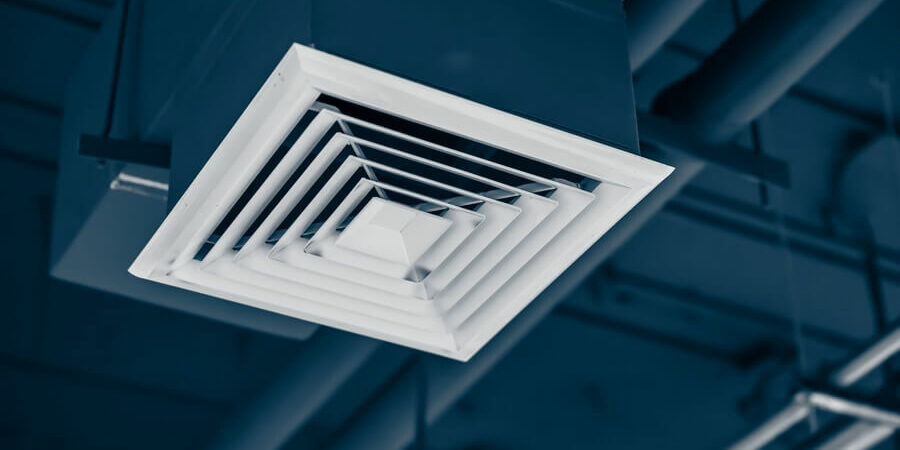
1. HVAC Integration: The Role of Waveguides
You cannot simply run a standard duct into an MRI room. Instead, shielding experts use RF Waveguides (also known as honeycomb filters).
- How they work: These filters consist of a matrix of small hexagonal cells. The geometry of these cells is calculated based on the cutoff frequency; they allow air to pass through freely while acting as an impenetrable barrier for electromagnetic waves.
- Material matters: Waveguides and the ducts immediately adjacent to the magnet must be made of non-ferrous materials (such as aluminum or high-grade stainless steel) to prevent them from becoming projectiles or causing magnetic field inhomogeneities.
2. Lighting and Electrical Systems
Standard LED drivers and fluorescent lights are notorious for generating RF noise. Integration involves:
- RF Filters: Every electrical line entering the room must pass through an RF power line filter. These filters “clean” the electricity, stripping away any noise before it reaches the interior.
- DC Lighting: Most modern MRI suites utilize DC-driven LED lighting to minimize the risk of electromagnetic interference.
3. Medical Gases and Quench Pipes
Medical gas pipes (Oxygen, Vacuum, Nitrous Oxide) must be non-magnetic and electrically isolated as they pass through the shield using specialized dielectric breaks.
Furthermore, the Quench Pipe—the emergency exhaust system for helium—is perhaps the most critical integration point. It requires a massive penetration that must be perfectly sealed to the Faraday cage while being robust enough to handle cryogenic temperatures and high pressure.
Why Partnership is Key
Integration errors are the leading cause of failed Acceptance Testing. If the HVAC contractor and the shielding provider are not in sync, the integrity of the room is at risk. This is why choosing a partner who understands the holistic “turnkey” approach is vital.
As we discussed in our guide on how to choose the right MRI shielding partner, technical expertise in managing these penetrations is what separates a standard enclosure from a high-performance diagnostic environment.
FAQ: MRI Shielding & Systems Integration
Can I use standard steel ducts for HVAC inside the MRI room?
No. Standard galvanized steel is ferromagnetic. Near the magnet, ducts must be non-ferrous (usually aluminum) to avoid interference with the static magnetic field and to ensure safety.
What happens if a waveguide is damaged?
A damaged or improperly installed honeycomb filter can lead to “RF leaks.” This often manifests as “zipper artifacts” on MRI images, which can obscure small lesions and render a scan undiagnosable.
Do I need separate filters for every electrical circuit?
Yes. Every single conductive wire (power, data, intercom, emergency lights) entering the Faraday cage must be filtered to ensure that the shield’s attenuation performance is not compromised.
Can the HVAC system affect the MRI’s “Quench” safety?
Indirectly, yes. The HVAC system must be designed to maintain proper pressure gradients. In the event of a quench, the room must have adequate pressure relief (via specialized valves integrated into the shield) to prevent the door from jamming shut due to pressure build-up.
Need help or have a project in mind?
Share the details with us! Our experts are at your disposal and ready to support you every step of the way, showing you the best solution for your needs.
Call us at +1 646 372 2191 or write us at info@qualityshielding.com