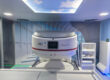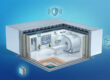
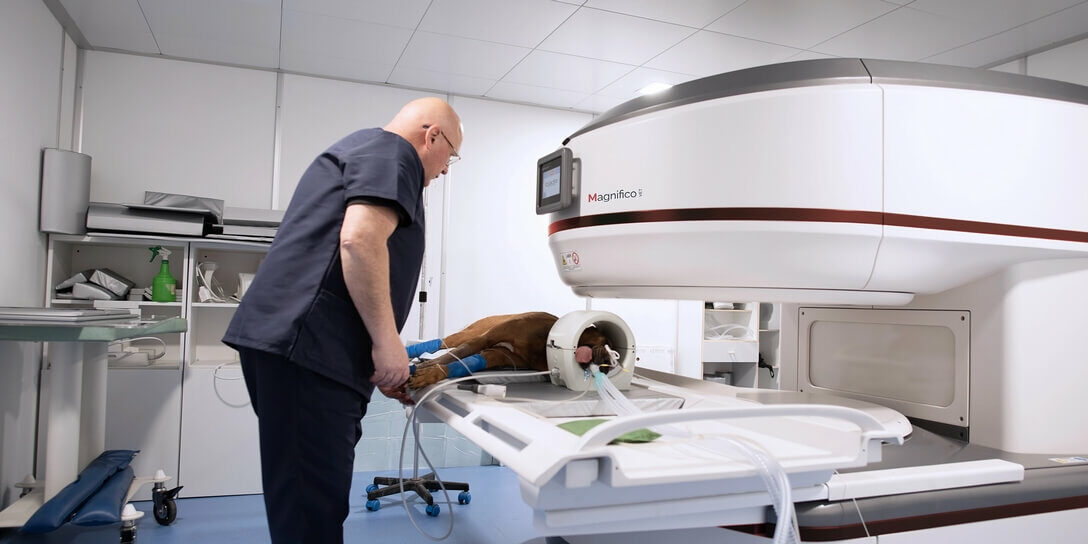
The integration of advanced diagnostic imaging into veterinary medicine has transformed how complex pathologies are managed in animals. However, implementing a high-field MRI suite within a veterinary clinic presents unique engineering challenges that differ significantly from human hospital environments. Providing a certified Faraday cage for these facilities requires a bespoke approach to electromagnetic containment and structural adaptation.
As veterinary clinics are often located in repurposed commercial or industrial buildings, the shielding must be engineered to guarantee 100dB attenuation within non-standard architectural constraints.
Structural adaptability and floor loading management
Human hospitals are generally designed with the structural capacity to support heavy medical equipment. In contrast, many veterinary centers are established in existing structures where floor loading and ceiling heights were not originally intended for MRI magnets.
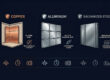
A professional shielding partner must conduct a thorough site analysis to design an aluminum or copper Faraday cage that minimizes weight without compromising performance. Our specialized MRI shielding for veterinary systems focuses on integrating the shield into the existing building fabric while ensuring the magnetic field remains perfectly contained and external RF noise is entirely eliminated.
Monitoring and anesthesia system integration
Unlike human patients, animals almost always require general anesthesia to remain still during a scan. This necessity introduces a layer of complexity regarding the penetration panels and RF filtration.
Vital signs monitoring equipment and anesthesia delivery systems must pass through the shield without acting as antennas for external interference. Our engineering approach focuses on specialized waveguides and dielectric breaks that allow for seamless connectivity between the control room and the MRI suite, ensuring that monitoring data is accurate and the RF integrity of the room remains uncompromised.
Optimizing diagnostic throughput and image quality
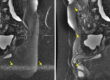
In veterinary medicine, the ability to obtain clear diagnostic images on the first attempt is critical to minimize anesthesia time. Even minor RF leaks can cause “zipper artifacts” that mask small lesions in feline or canine patients.
By implementing high-performance RF shielding, veterinary centers can guarantee the highest signal-to-noise ratio (SNR). This precision allows for faster scan times and more accurate diagnoses, which is the hallmark of a premier veterinary imaging facility.
A turnkey approach to veterinary MRI shielding ensures that from the initial site survey to the final acceptance test, every technical variable is managed to provide a safe, durable, and high-performing diagnostic environment.
Need help or have a project in mind?
Share the details with us! Our experts are at your disposal and ready to support you every step of the way, showing you the best solution for your needs.
Call us at +1 646 372 2191 or write us at info@qualityshielding.com