
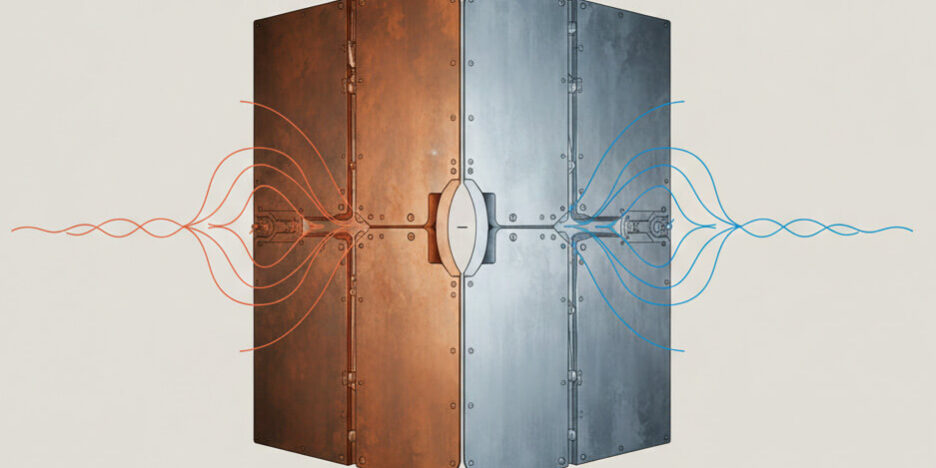
When designing a diagnostic suite, one of the most critical decisions involves selecting the conductive metal for the RF enclosure. The choice between copper and aluminum in MRI shielding impacts not only the initial investment but also the long-term performance and shielding effectiveness of the installation.
To understand why these materials are used, it is helpful to first review how Faraday cages work in MRI applications to block external interference. Both metals offer excellent conductivity, but they differ significantly in terms of mechanical properties and installation requirements.
Copper Shielding: The Gold Standard for MRI Rooms
Copper remains the most widely used material in the industry, especially for high-field magnets like 3T systems. Its high electrical conductivity and exceptional resistance to corrosion make it a reliable choice for long-term stability.
Key advantages of copper include:
- Superior Conductivity: Offers the highest shielding attenuation levels across a wide frequency range.
- Reliable Joints: Copper foils or sheets can be easily soldered, ensuring electrical continuity that is virtually immune to oxidation.
- Thin Profile: Due to its efficiency, copper shielding is often thinner than aluminum, saving valuable space in MRI room design.
Aluminum Shielding: A Lightweight and Cost-Effective Alternative
Aluminum is an increasingly popular choice, particularly in modular MRI shielding systems. While its conductivity is approximately 60% that of copper, it compensates with other structural benefits.
Key advantages of aluminum include:
- Cost-Efficiency: Aluminum is generally less expensive than copper, which can significantly reduce the material costs for large-scale projects.
- Weight-to-Strength Ratio: Being much lighter, it reduces the load-bearing requirements on the building’s floor, which is a major factor in retrofitting MRI shielding in existing buildings.
- Rigidity: Aluminum panels provide structural stiffness, often serving as both the shield and the wall support.
Comparison: Shielding Effectiveness and Technical Challenges
The main challenge with aluminum lies in the joints. Unlike copper, aluminum cannot be easily soldered in a field environment; it requires specialized mechanical fastening and conductive gaskets to prevent RF leakage. If these joints are not perfectly maintained, oxidation can occur, leading to a drop in the Signal-to-Noise Ratio (SNR).
In contrast, copper’s ability to be permanently bonded through soldering provides a “set it and forget it” reliability that many hospital engineers prefer for critical diagnostic environments.
Conclusion: Which Material Should You Choose?
The decision between copper and aluminum often comes down to the specific project requirements:
- Choose Copper if you are installing a high-field (3T or higher) MRI, where decibel (dB) attenuation is critical, or if you want the most durable, low-maintenance solution.
- Choose Aluminum for modular installations where weight is a concern or when working within a more restrictive budget for 1.5T systems.
Proper engineering and shielding certification are essential regardless of the material chosen to ensure the MRI system operates at peak performance.
Need help or have a project in mind?
Share the details with us! Our experts are at your disposal and ready to support you every step of the way, showing you the best solution for your needs.
Call us at +1 646 372 2191 or write us at info@qualityshielding.com