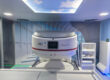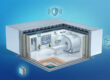
The final acceptance test represents the definitive validation of an MRI installation project. This phase ensures that the Faraday cage provides the required RF attenuation and that the magnetic field containment aligns with the manufacturer’s strict specifications. Ensuring a successful outcome requires a rigorous pre-test protocol to eliminate any variables that could compromise the diagnostic environment.
Achieving 100dB attenuation requires more than just installation; it demands a clinical-grade environment ready for high-precision electromagnetic measurement.
Substrate decontamination and debris management
A critical prerequisite for magnetic field homogeneity is the total absence of ferrous contamination. The technical floor and the area surrounding the magnet’s final position must undergo a professional decontamination process. Even microscopic metallic particles or forgotten construction hardware can induce magnetic field distortions that are difficult to correct once the magnet is ramped.
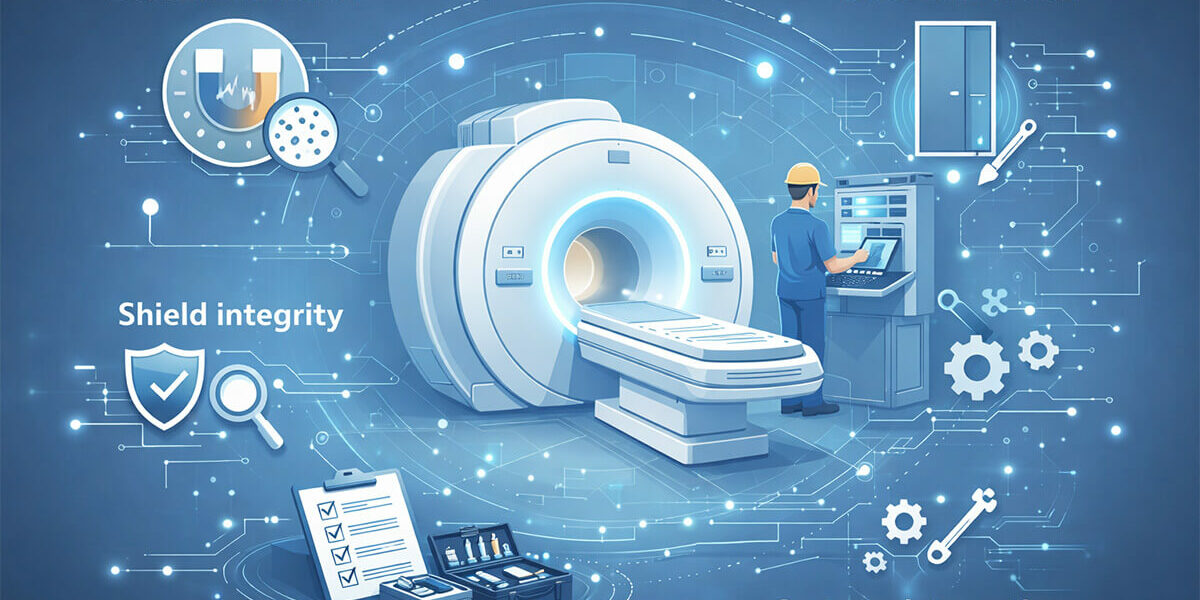
Systematic verification of shield integrity
Every service penetration represents a potential point of failure. Following the guidelines established in our analysis of how shielding integrates with HVAC and hospital systems, engineers must verify the electrical isolation of every conduit. All RF filters must be tested for proper grounding, and dielectric breaks on medical gas lines must be inspected to prevent the “antenna effect” that bypasses the shield’s protection.
The MRI door: mechanical and electrical calibration
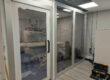
As the only moving component of the Faraday cage, the MRI door requires precise mechanical alignment. Prior to testing, the RF gaskets and contact fingers must be inspected for continuity. Any misalignment in the closing mechanism or even minor oxidation on the contact surfaces can cause significant RF leakage, leading to failed compliance during the attenuation sweep.
Environmental and HVAC stabilization
The precision of RF testing instruments is sensitive to environmental fluctuations. The HVAC system must be fully operational and balanced to maintain a stable thermal and barometric environment. This stability is essential not only for the testing equipment but also to verify that the pressure relief systems (quench valves) are correctly integrated into the shield without compromising its hermetic seal.
Final systems integration and commissioning
The room must be in its final operational state. This includes the full installation and powering of DC lighting systems, intercoms, and monitoring equipment. Any post-test modification to the internal finishes or electrical layout could invalidate the certification, necessitating a complete re-test of the 100dB attenuation performance.
By adhering to these professional preparation standards, healthcare facilities can ensure a seamless transition from construction to clinical operation, guaranteeing long-term image quality and patient safety.
Need help or have a project in mind?
Share the details with us! Our experts are at your disposal and ready to support you every step of the way, showing you the best solution for your needs.
Call us at +1 646 372 2191 or write us at info@qualityshielding.com